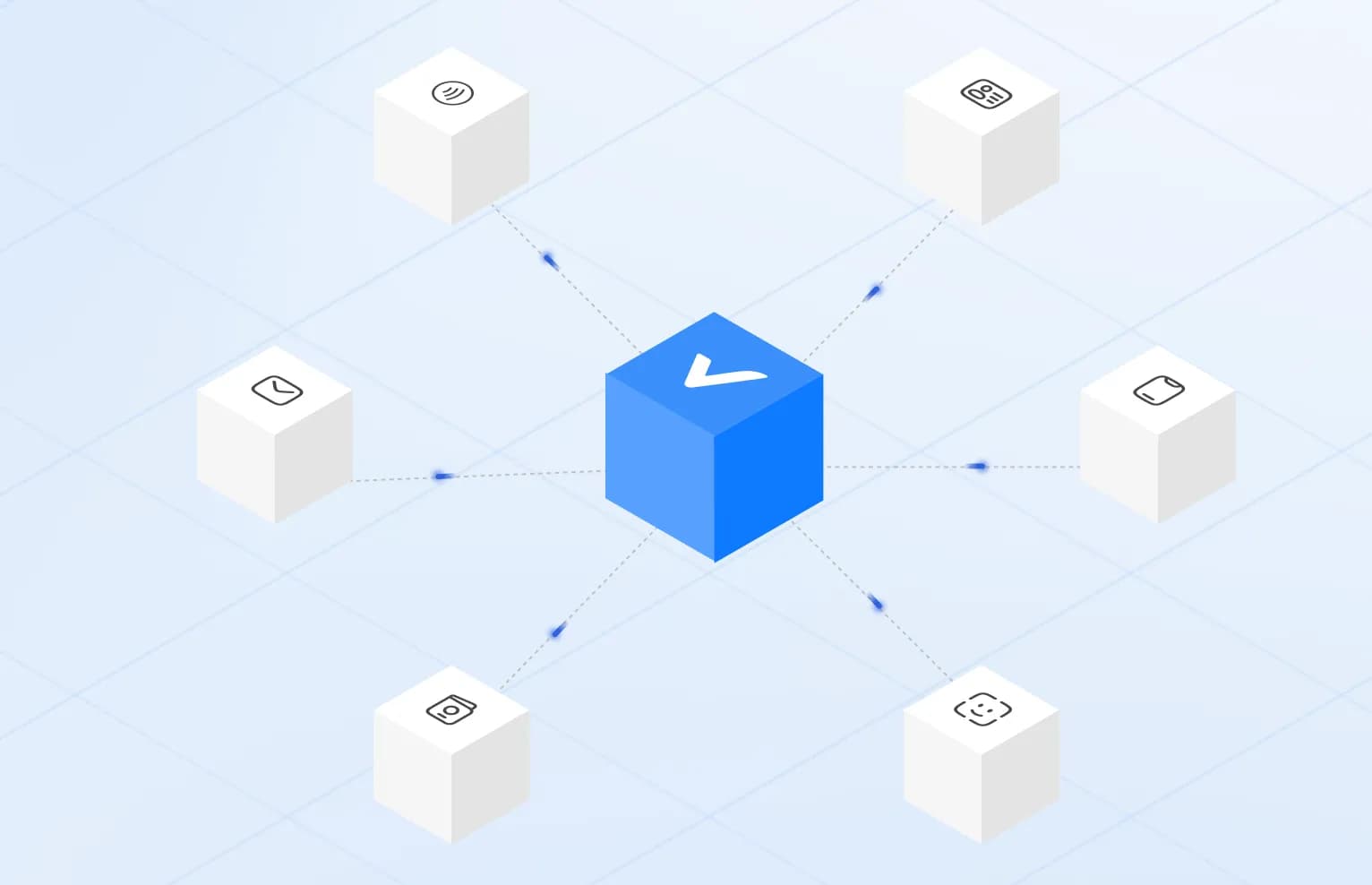
Identity Verified
How Modern Identity Verification Works
From document checks to biometrics, understand the layers behind a modern verification flow.
4 min · October 2026
Read More: How Modern Identity Verification WorksMissing a country or a custom check? Usually live within a day.Book a 15-min call
How document, biometric and signal checks fit together in a production verification pipeline.
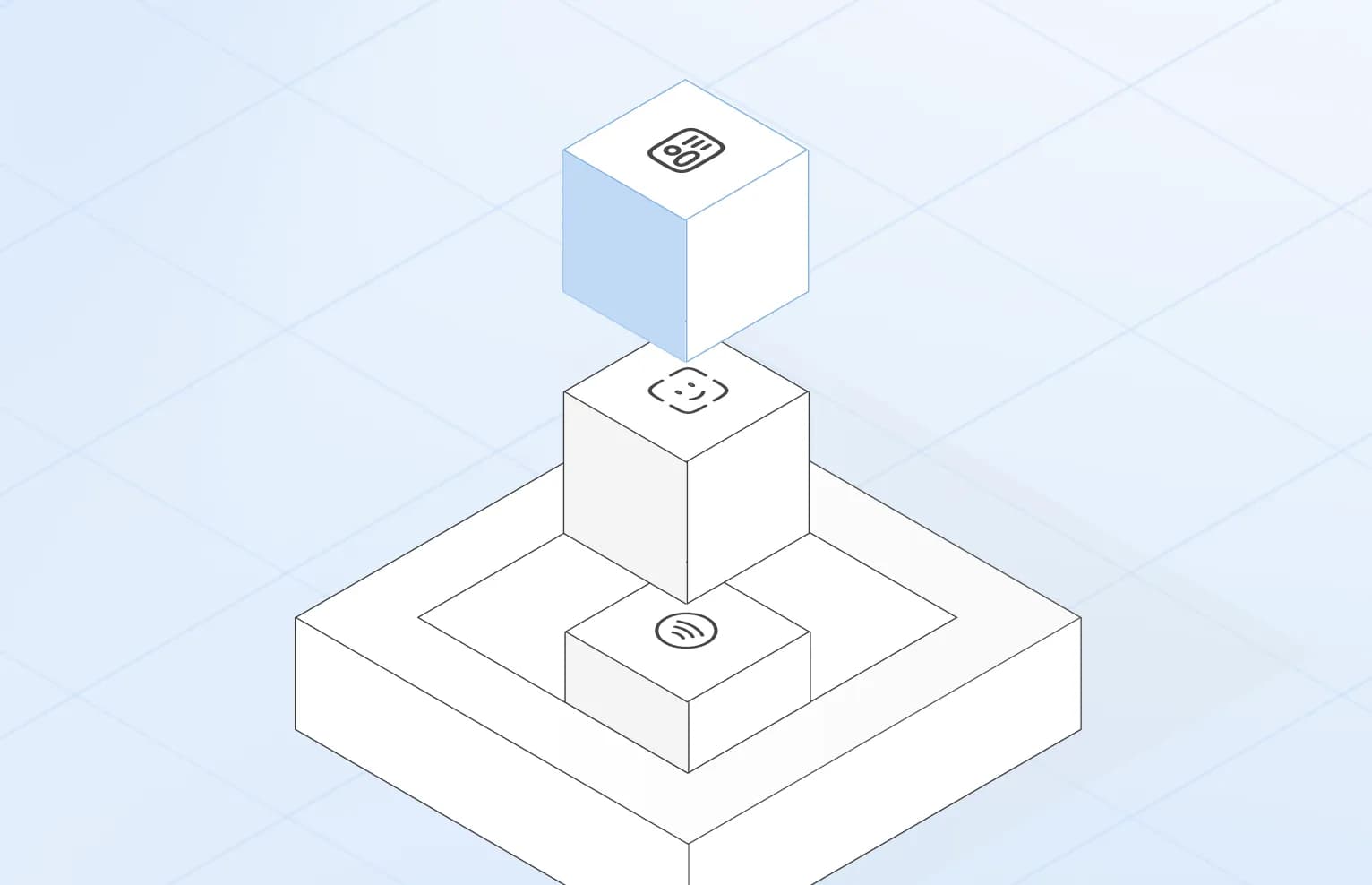
A modern stack sequences capture, document checks, biometrics, and risk signals, then returns a clear outcome.
Each stage feeds the next. Poor capture makes document checks unreliable, an unreliable document makes the face match meaningless, and risk signals only add value when the other layers have done their job. Thinking about the stack as a pipeline, rather than a list of features, makes it easier to see where a failure starts.
A typical sequence looks like this:
Most verification failures start with a bad photo: glare across the data page, a blurred portrait, a cropped corner. Good capture guides the user in real time, detects the document edges, rejects frames that are too dark or out of focus and only takes the picture when the image is usable.
Device choice matters too. Many users start on a desktop, where webcams are poor and NFC is unavailable. A QR handoff lets them continue on their phone and return to the original session when finished. That single step often does more for completion rates than any change to the checks themselves.
Document verification answers one question: is this a real, unaltered document issued by the authority it claims? It usually combines three methods.
| Check | What it does | Limits |
|---|---|---|
| Visual inspection | Looks at layout, fonts, security features and signs of editing | Depends on image quality |
| MRZ parsing | Reads the machine-readable zone and validates check digits against the printed data | A forger can produce a valid MRZ |
| NFC chip | Reads the signed data on the chip and verifies the issuer's signature | Needs a chip-enabled document and an NFC phone |
The chip is the strongest of the three, because the data is cryptographically signed by the issuing state. Where it is available, it is worth using. Where it is not, visual and MRZ checks remain the baseline, and the flow should fall back gracefully rather than fail.
The biometric layer answers a different question: is the person in front of the camera the holder of this document?
Face matching compares the live image with the document portrait, or with the chip photo, which is usually cleaner. Liveness detection checks that the image comes from a live person who is present now, not a printed photo, a screen replay or a mask. That covers presentation attacks. Injection attacks, where a fake video stream is fed directly into the app or browser, need separate defences at the device and session level.
These two checks only work together. A face match without liveness can be beaten with a photo. Liveness without a face match proves someone is real, but not that they are the right person. Our article on face matching and liveness goes deeper into how the two interact.
Each layer answers a different question. Orchestration decides which checks run for which risk tier.
Risk signals add context the document and face cannot provide: an emulator or virtual camera, a session that has been replayed, the same face appearing on several accounts, or data that does not fit together. None of them should decide on their own, but they shift how much you trust the rest.
Orchestration turns this into policy. Running every check on every user is expensive and adds friction. Running too few lets fraud through. A common approach is to tier by risk:
The tier can depend on the product, the transaction value, the market or signals collected earlier in the session. Read the anatomy of identity fraud for the attack patterns these tiers are meant to address.
The output should be a decision your backend can act on, not a pile of raw scores. A useful result includes the overall outcome, the checks that ran, the reason for any failure and a timestamp.
Conceptually, integration has two parts. Your frontend starts a session and hands the user into the flow. When the flow ends, a webhook notifies your backend, which fetches the result and updates the account. Treat webhooks as a trigger, not the source of truth: verify their signature, handle retries and make processing idempotent so a duplicate call does not create a duplicate account.
Monitoring thresholds, failure modes, and user drop-off keeps assurance high without burning conversion.
Once live, the stack needs the same attention as any other production system. Track:
secuveri covers documents from 46 countries, with NFC chip reading where available, face matching, liveness detection and fraud signals. You choose which checks run in each flow, and the flow can be white-labelled to match your product.
This article is general information, not legal or compliance advice. Your obligations depend on your sector, licence and markets.

Build a verification experience around your business.
From document checks to biometrics, understand the layers behind a modern verification flow.
4 min · October 2026
Read More: How Modern Identity Verification Works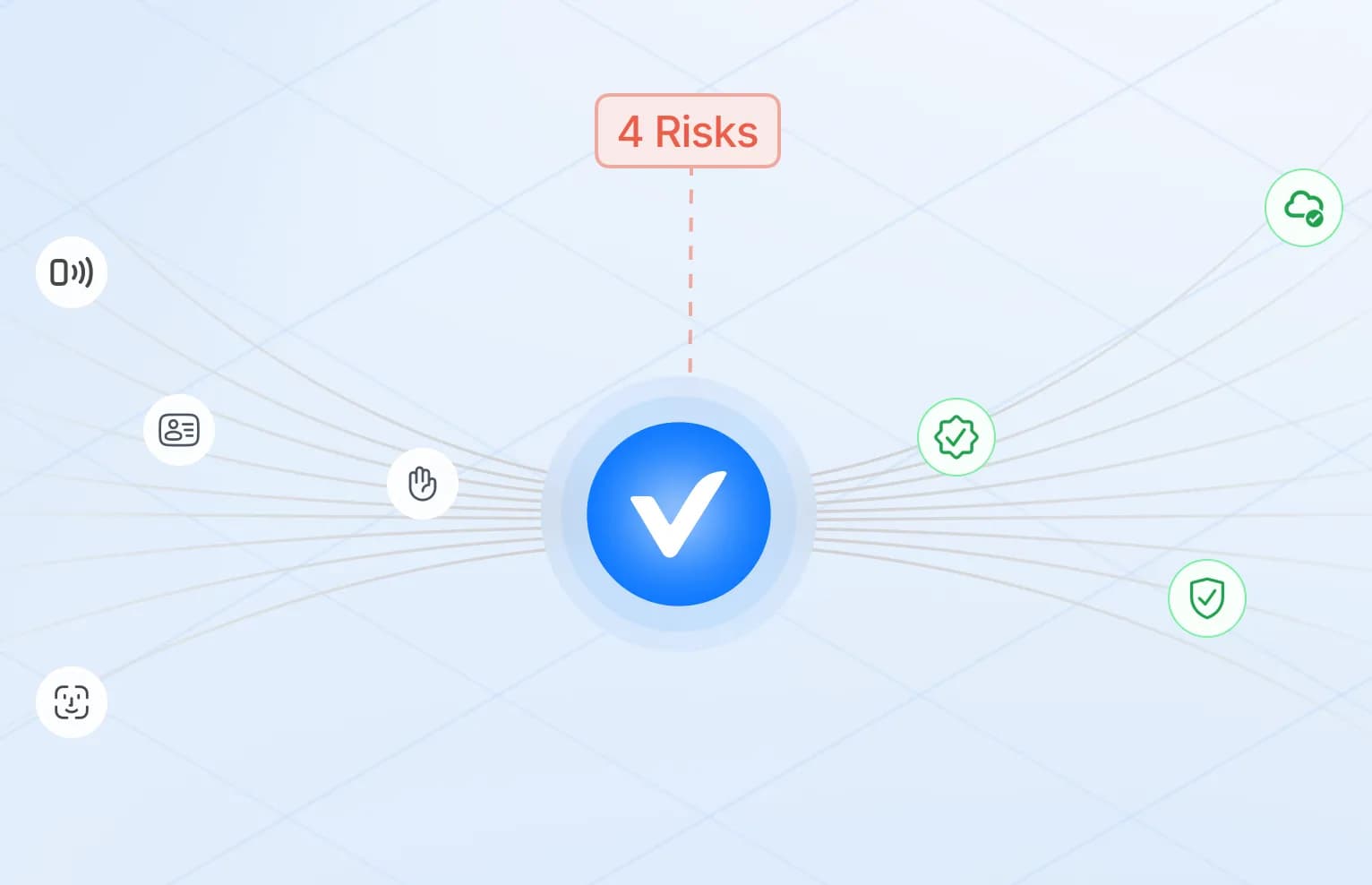
How attackers exploit documents, images and digital identity signals — and where verification stops them.
5 min · October 2026
Read More: The New Anatomy of Identity FraudTell us what you’re trying to verify. We’ll show you how secuveri can fit your workflow.