Privacy
Privacy by Design in Identity Verification
How to confirm a person is real while keeping sensitive biometric material off your servers.
4 min · October 2026
Read More: Privacy by Design in Identity VerificationMissing a country or a custom check? Tell us what you need.Book a 15-min call
What the Tobacco Products Act means for online shops selling tobacco and vapes in Switzerland, and how to build an age check that holds up.
By secuveri teamPublished
For years, many Swiss online shops selling cigarettes, heated tobacco, e-liquids and disposable vapes relied on an "I confirm I am over 18" checkbox. That is a self-declaration. The customer states something about themselves and nobody checks it.
Since 1 October 2024, the federal Tobacco Products Act (TabPG) has set a nationwide minimum age of 18. It covers tobacco products, oral nicotine products, herbal smoking products and e-cigarettes with or without nicotine, and it applies to every sales channel: shop counters, vending machines and online sales. According to the Federal Office of Public Health (BAG), a click on "I am 18" does not establish age. The shop picks the system, but the system has to establish age reliably.
So an online shop needs to be able to show that it actually checked a customer's age before fulfilling an order. Being told the customer was old enough is not the same thing.
What counts as a sufficient check for your products and channels is a question for your legal adviser. This post covers the practical side: the options, and how to fit them into a checkout. Our page on age checks for tobacco and vape shops summarises the rule and links the BAG's FAQ.
An age check answers one question: is this customer at or above the required age? It doesn't need to know who the customer is.
That matters. A vape shop rarely has a reason to keep a customer's ID details, portrait and date of birth, and holding them is a liability. A good check gives the shop the result, the method used and a timestamp. That is enough to show a check took place, and it keeps the personal data you hold close to zero. Our post on privacy by design follows the same principle.
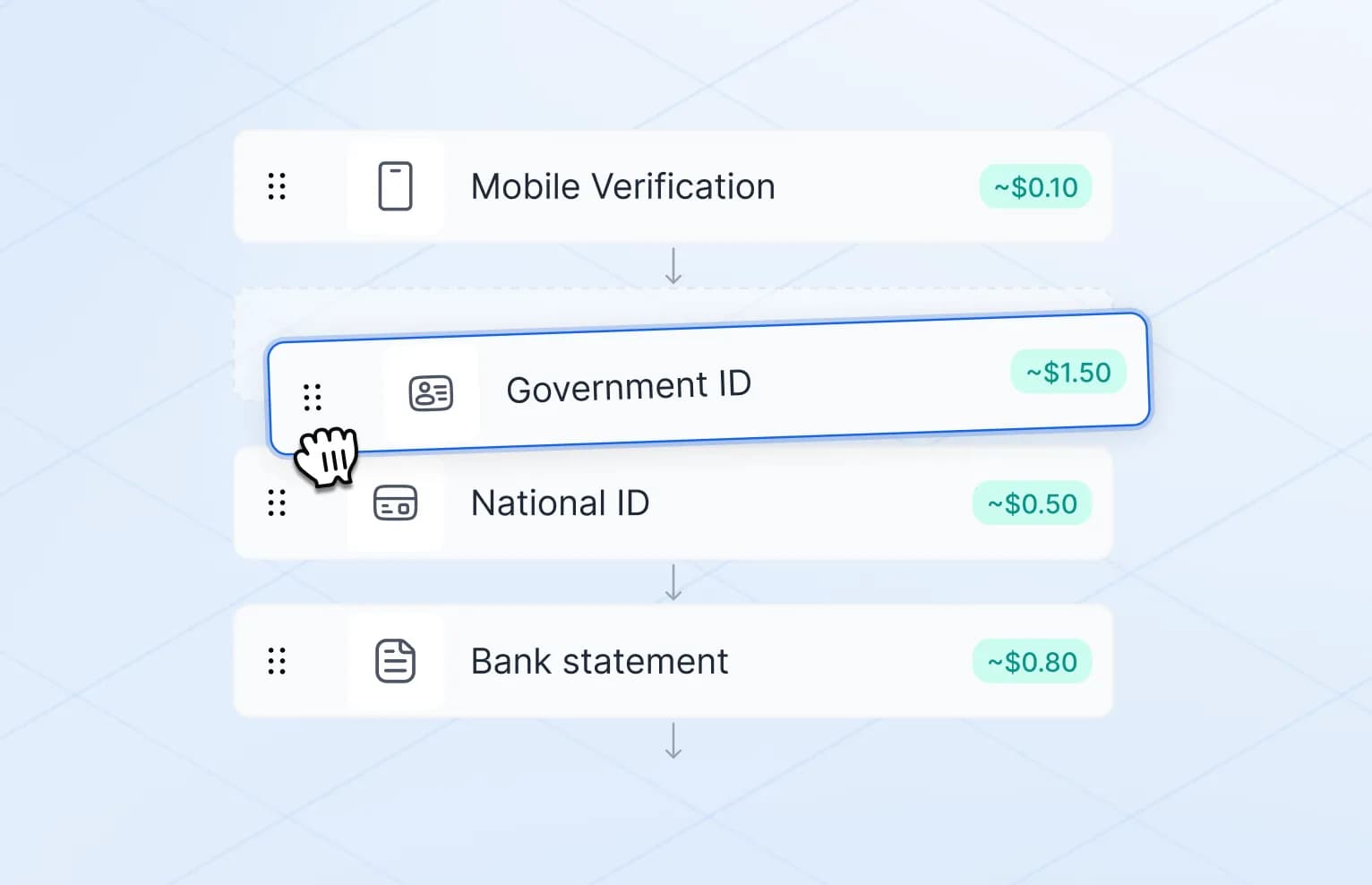
Most shops combine two or more of the methods on our age verification page.
ID-based age check. The customer photographs a supported identity document, the date of birth is read from it and compared with the threshold. Where the document has a chip, it can be read by NFC. This gives the highest certainty and is the usual fallback when other methods are inconclusive. It works with Swiss documents and with documents from other supported countries.
Age estimation. The customer takes a live selfie, liveness detection rules out photos and screens, and a model estimates whether the person is above the threshold. It's quick and needs no document. Age estimation is most reliable when the person is clearly older than the limit. Near 18 it is less certain, so borderline results should move on to an ID check.
Digital identity wallet. Here the customer shares a verified "over 18" attribute from a wallet without revealing anything else. The Swiss E-ID in the federal swiyu wallet is designed for this kind of selective disclosure. A revision of the Tobacco Products Ordinance, in consultation since December 2025, would recognise it for age checks. secuveri already accepts "over 18" from the swiyu wallet in swiyu's public beta, and will accept the state E-ID when it launches. Even then, shops will still need a document-based option, since foreign customers won't have a Swiss E-ID.
Placement affects both compliance and conversion.
Checking once at account creation means returning customers aren't asked again, which suits shops with many repeat buyers. Make sure guest checkout can't get around it.
If you also sell unrestricted products, such as chargers or cases, you can trigger the check only when the basket contains an age-restricted item. Someone buying a charger sees no extra step.
Some shops add a check at handover, because the person receiving the parcel may not be the person who ordered it. Whether you need that on top of the online check depends on your carrier's options and your legal assessment.
For most shops the cleanest setup is to check at account creation or at the first restricted purchase, store the result against the account, and ask again only when something changes, such as a new delivery address or signs that an account is being shared.
With secuveri, the age threshold is evaluated inside secuveri. Your shop's server receives a signed result with the outcome, the method used and a timestamp. That result contains no personal data: no date of birth, no photos. The selfie and any document images stay with secuveri, stored on our own servers in the EU, and are kept only as long as the retention period you set. You choose which methods to offer and when to trigger the check, for example only for age-restricted products.
You can try the flow in our live 18+ shop demo, or see it alongside the bank onboarding demo on the demos page.
If parts of your business need full identity checks, such as wholesale or B2B accounts, those run as a separate flow through identity verification. Someone buying a vape doesn't have to go through full KYC.
This article is general information, not legal or compliance advice. Your obligations depend on your sector, licence and markets.

Build a verification experience around your business.
How to confirm a person is real while keeping sensitive biometric material off your servers.
4 min · October 2026
Read More: Privacy by Design in Identity VerificationWhat true accept and false reject rates actually mean when you verify people at scale.
4 min · October 2026
Read More: Face Matching vs. Liveness DetectionTell us what you’re trying to verify. We’ll show you how secuveri can fit your workflow.