Business
Understanding Digital Identity Compliance
What businesses need to know about compliance when verifying identities across markets.
5 min · October 2026
Read More: Understanding Digital Identity ComplianceMissing a country or a custom check? Tell us what you need.Book a 15-min call
How Swiss anti-money laundering rules shape customer onboarding, and what a remote KYC flow has to cover for a financial intermediary.
By secuveri teamPublished
In Switzerland, the duty to know your customer comes mainly from the Anti-Money Laundering Act (AMLA, GwG in German). It applies to financial intermediaries: banks, securities firms, payment and money transfer providers, asset managers, many crypto businesses and others that hold or move money for clients.
Which rules you follow in detail depends on how you are supervised. Some intermediaries are supervised directly by FINMA, the Swiss Financial Market Supervisory Authority. Others are affiliated with a self-regulatory organisation (SRO), which issues its own regulations within the AMLA framework. Banks also follow their industry's due diligence agreement, the Agreement on the Swiss banks' code of conduct with regard to the exercise of due diligence (CDB 20). The core expectations are much the same across these routes, but the details differ, so first confirm which set applies to your licence.
Businesses outside the AMLA, such as online shops or marketplaces, have no general KYC duty. Many run similar checks anyway, to cut fraud or to meet sector rules such as age limits.
This article is a general overview, not legal advice. Check your obligations with your compliance team or your SRO.
KYC under the AMLA comes down to a few duties that apply before a business relationship starts:
Together these make up customer due diligence. The approach is risk-based. Relationships with politically exposed persons or links to high-risk countries need enhanced checks, and monitoring continues for as long as the relationship lasts.
Most new customers expect to open an account from their phone. For that, FINMA Circular 2016/7 "Video and online identification" sets out how financial intermediaries can identify clients without meeting them in person. It describes two routes.
Video identification. A trained employee checks the customer and their document on a live video call. See the glossary entry on video identification.
Online identification. The customer photographs their identity document and takes a selfie, and the checks run in software. The glossary covers this as automated identification.
For both routes, the circular sets requirements on which documents are acceptable, how authenticity is checked, how the person is matched to the document and what has to be recorded. The online route also includes steps beyond the identity check itself, such as confirming the address. FINMA announced a partial revision on 8 October 2026 that applies from 1 November 2026. Among other things, it makes liveness detection explicit on every online route and admits the Swiss E-ID for online identification. Our guide to FINMA Circular 2016/7 walks through the changes. For your own process, work from the current circular and, if you're affiliated with one, your SRO's regulations, not from a summary.
Whatever your exact rules, a remote KYC flow in Switzerland has to answer three questions, with evidence you can store and show later.
Is the document genuine? Document checks inspect the machine-readable zone, the visual zone and the security features against the issuing template. Where the document has a chip, NFC verification reads its data and checks the issuing country's digital signature. A forger can copy how a document looks, but not that signature. That makes the chip the strongest remote document check available.
Does the document belong to the person in front of the camera? Face matching compares a live capture with the document portrait or, better, with the chip image. Liveness detection confirms that a real person is present, not a printed photo, a screen or a mask.
Can you prove what happened? The record should show which checks ran, what they returned and when. Anti-money laundering law sets retention periods for KYC records, and they can be long, so plan storage and access from the start.
secuveri's identity verification combines document checks, NFC chip reading, face matching and liveness detection in one flow. You switch on only the checks a use case needs, which helps when customer segments or products follow different rules. To see a complete account opening with KYC and AML screening, try the bank onboarding demo.
Swiss residents onboarding remotely usually present a Swiss passport or identity card, or a foreign passport together with a Swiss residence permit. Our Switzerland coverage page lists the document types supported for the Swiss market. Which of them your rules accept for KYC is a separate question. A driving licence, for example, may be fine for an age check but not for identification under your regulations.
KYC data sits under two regimes at once. Anti-money laundering law says what to collect and keep. The revised Federal Act on Data Protection, the nFADP, says how to handle it. Biometric data that uniquely identifies a person counts as sensitive personal data under the nFADP, so face images and templates need a clear purpose, transparent information for the customer and strong protection.
Where the data is processed and stored matters too, to customers and in your own risk assessment. secuveri stores verification data on its own servers in the EU (Vienna, Austria), with encrypted backups in Germany; our security page has the details. For ways to keep sensitive material to a minimum, see our post on privacy by design.
A short checklist for compliance and product teams:
This article is general information, not legal or compliance advice. Your obligations depend on your sector, licence and markets.

Build a verification experience around your business.
What businesses need to know about compliance when verifying identities across markets.
5 min · October 2026
Read More: Understanding Digital Identity Compliance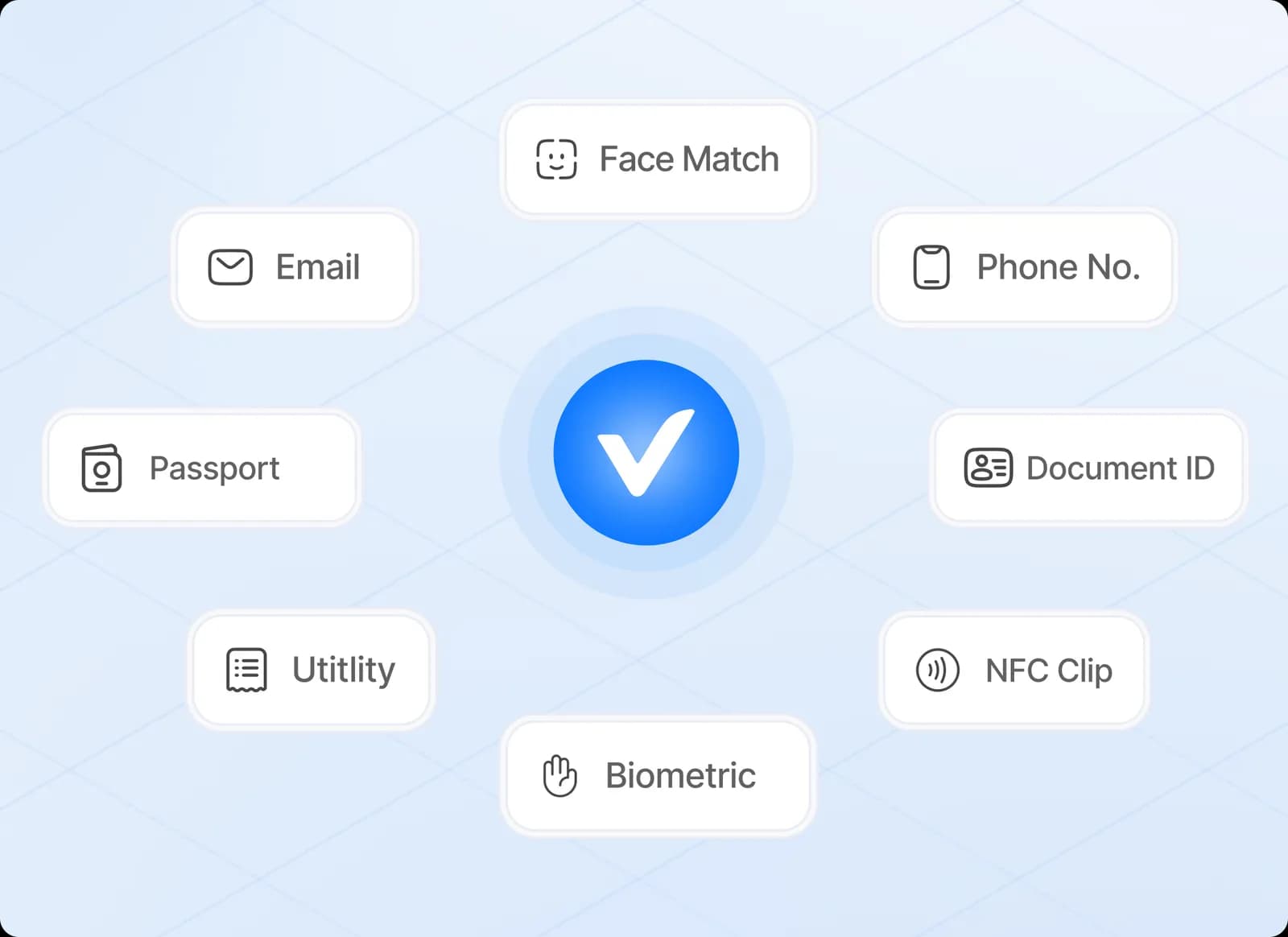
A practical guide to how modern identity verification works, what businesses actually need to verify, and how privacy can remain central to the process.
8 min · October 2026
Read More: What is digital identity verification and why does it matter?Tell us what you’re trying to verify. We’ll show you how secuveri can fit your workflow.